Why Headless Commerce Is Core to Modern Omnichannel Retailing Scaling
PUBLISHED ON JULY 4, 2026
Why Headless Commerce Is Core to Modern Omnichannel Retailing Scaling
In the modern digital infrastructure landscape, monolithic application architectures are rapidly transforming into specialized, decoupled microservices. For high-growth enterprise platforms, the traditional method of running a frontend store directly joined to a transactional SQL database is becoming an operational liability. When sudden web traffic spikes occur during marketing pushes or flash checkouts, a single unoptimized database query can cause system-wide processing delays.
This deep technical blueprint breaks down why modern omnichannel platforms are shifting toward Headless Commerce. By separating the presentation layer from backend transactional environments, engineers can significantly reduce latency metrics, increase resilience against layout bottlenecks, and maximize long-term conversion workflows.
1. The Core Architecture Problem of Monolithic Systems
Traditional monolithic systems bundle the user-facing interface, the product catalog engine, and the processing ledger into a singular, highly dependent code framework. While this layout simplifies early staging deployments, it introduces severe system vulnerabilities as user traffic grows.
The SQL Connection Pooling Crisis
In a monolith, every user rendering a standard product listing page initiates a database connection or draws from a limited connection pool. When concurrent users increase from hundreds to tens of thousands, the relational database experiences immense processing strain. CPU utilization spikes to 100%, query execution times lengthen, and the application server begins dropping connections, leading to severe 504 Gateway Timeout errors.
Brittle Omni-Channel Routing
Modern businesses do not sell exclusively on a single desktop browser. Inventory logic must simultaneously feed mobile apps, point-of-sale terminal frameworks, smart wearable channels, and third-party marketplace APIs. Forcing a monolithic layout to render semantic HTML while serving JSON schemas across external devices results in massive payload bloat, slowing down performance metrics.
2. Decoupling the Stack with Headless CMS & Commerce Tools
The headless architectural model completely severs the link between the user interface and data storage systems. The presentation layer handles nothing but layout rendering, pulling localized data from a Content Management System (CMS) or commerce engine using lightweight, CDN-cached GraphQL or REST API requests.
Eliminating the Primary Database Strain
By utilizing an API-first approach with a headless CMS like Sanity.io, data is statically compiled or incrementally updated at the edge. When a shopper visits your product log, they are served pre-rendered layouts straight from a global content delivery network (CDN). The database engine is never directly hit by standard page-load traffic, reserving processing power entirely for checkout ledger modifications.
3. Leveraging Next.js Server Components for Maximum Speed
Choosing the right frontend framework is critical when deploying a decoupled headless ecosystem. Modern React architectures, specifically Next.js utilizing React Server Components (RSC), offer perfect optimization patterns for these modern data models.
Shifting the Client Processing Weight
Historically, early client-side JavaScript applications forced the user's browser to download massive framework bundles, execute data-fetching logic, and construct the DOM elements manually. This caused poor First Contentful Paint (FCP) and Interaction to Next Paint (INP) scores on mobile devices.
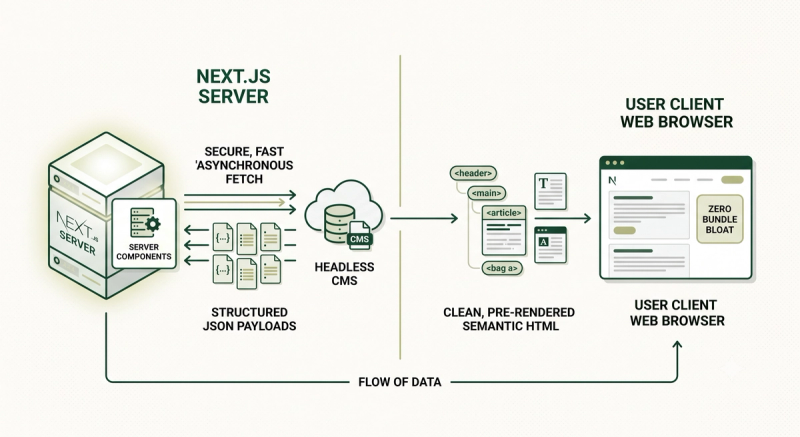
Next.js Server Components completely flip this sequence:
Server Ingestion: The Next.js edge environment intercepts the public route request.
Direct Asynchronous Fetching: The server securely calls the Sanity CMS API endpoint directly over internal networks, avoiding client-side layout leaks.
Optimized Stream Output: The server renders the presentation components into clean, non-blocking HTML and streams it directly to the browser.
Zero Bundle Bloat: The client browser receives instant visual structures with zero unnecessary JavaScript overhead, maximizing Core Web Vitals performance.
4. Operational Steps to Move Your Stack Headless
Transitioning an enterprise business away from legacy infrastructure requires a methodical engineering approach.
Step 1: Isolate Data Schemas
Begin by mapping out your legacy relational data tables into structured, independent CMS schemas. Group core attributes into clean documents like products, variants, authors, and category blocks.
Step 2: Configure Edge Routing Rules
Deploy global reverse-proxy rules using platforms like Vercel or Cloudflare. Ensure your static marketing pages and product layout schemas are aggressively cached using edge cache parameters, invalidating data only when webhook mutations occur inside your CMS.
Step 3: Implement Asynchronous Parallel Fetching
When building your Next.js page layouts, leverage parallel fetch promises. Rather than making blocking sequential data calls, initiate your product text requests, inventory logic validations, and structural media layouts at the exact same moment to keep server response times under 50ms.
5. The Critical SEO Impact of Headless Performance
For modern digital businesses, page load latency directly influences search engine ranking positions and acquisition metrics. Google's search algorithms heavily penalize applications that feel sluggish or exhibit layout shifts during asset hydration.
By serving static HTML directly from edge nodes, your Core Web Vitals scores shift entirely into the positive green zone. Bots crawl clean semantic layouts effortlessly, indexing your technical keyword patterns fast without timing out on complex client-side script components.
6. Long-Term Architecture Maintenance and Scaling
Building a headless platform is not a one-time project; it requires proactive engineering governance. To safeguard your system uptime matrix over years of operation, you must implement continuous automated testing loops.
- Vulnerability Scanning: Configure automated package scanning to prevent vulnerable third-party dependencies from breaking your layout rendering loops.
- Database Query Pruning: Continuously audit backend relational database queries using system profilers to catch and resolve indexing bottlenecks early.
- Edge Invalidation Webhooks: Ensure your CMS system triggers instant, precise Purge API webhooks so content edits show up globally within seconds without requiring complete site rebuilds.
By committing to a clean, decoupled, headless architecture layout, your enterprise platform gains the structural agility needed to scale operations, protect data integrity, and lead your industry space for years to come.